
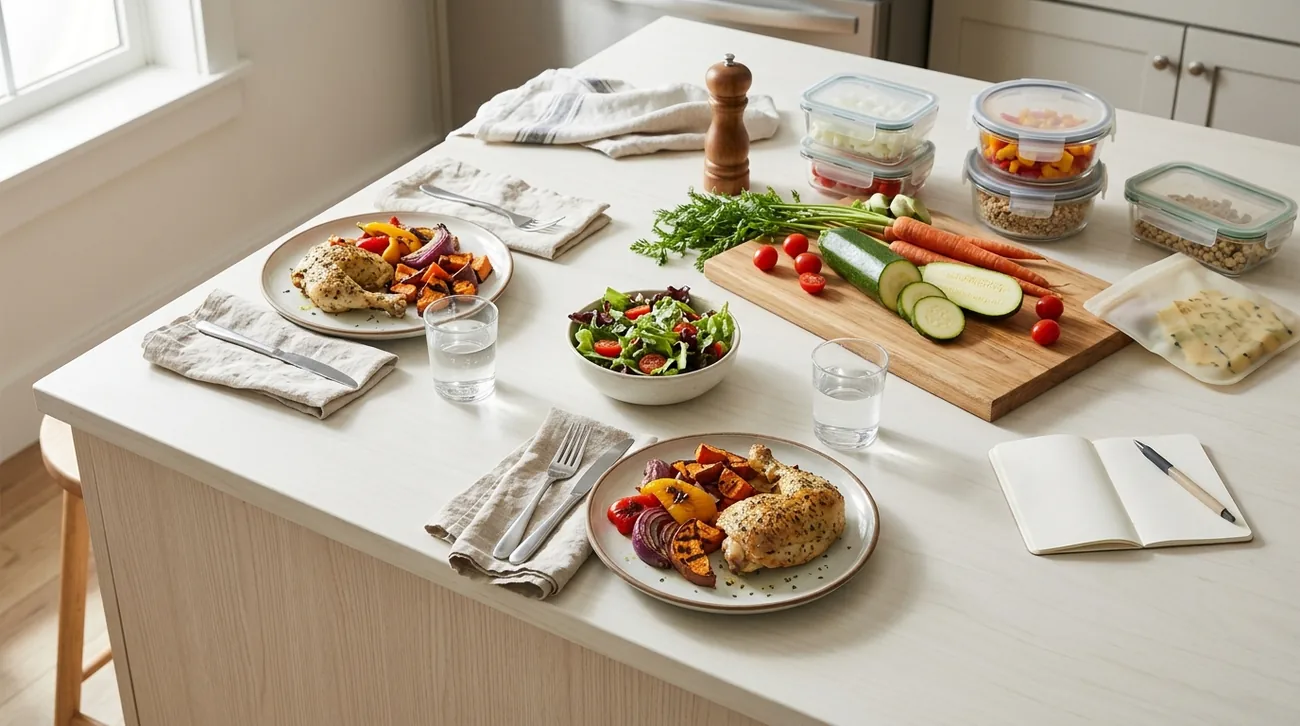
How to Plan Fresh Dinners for Two Without Food Waste starts with one useful decision: eat fresh dinners for two without purchasing family-size amounts that cannot be used. A good plan is not a strict timetable that falls apart whenever an evening runs late. It is a short set of meal options, an accurate shopping list, and a way to keep fresh ingredients in good condition until they are needed. This approach focuses on small-household planning with fewer abandoned half-packages and on reducing unnecessary preparation.
A realistic example is one bell pepper in pasta and later an omelet, half a bunch of herbs in sauce and the rest in a grain bowl. Treat that as a framework rather than a promise that the same items will be fresh or available every week. Your local market, household size, schedule, and cooking equipment all influence the best choices. The point is to connect what you buy to meals you will genuinely cook.
The purpose of this weekly plan for dinners for two
The guiding priority is to eat fresh dinners for two without purchasing family-size amounts that cannot be used. Without that priority, it is easy to copy an appealing menu that calls for too many unrelated ingredients. A useful plan respects how you eat, how many people are at the table, and how many evenings you can realistically cook. Leave a little room for leftovers, changes of appetite, and invitations that alter the schedule.
For dinners for two, a detail worth remembering is this: eat fresh dinners for two without purchasing family-size amounts that cannot be used. Delicate leaves usually demand attention sooner than whole carrots or sturdy squash. Consider that difference before assigning recipes to calendar days. The most attractive menu is not automatically the most practical one; a smaller number of compatible ingredients often makes a more relaxed and varied week.
Dinners for two: start with an honest kitchen inventory
In the context of dinners for two, consider this practical point: plan portions around shared ingredient bundles and a deliberate second use for each perishable. Check which vegetables are already open, which grains or beans are available, and which prepared ingredients still need using. This prevents duplicate purchases and may reveal that a nearly complete dinner already exists. Put perishable ingredients near the front of the list instead of burying them behind items with a longer storage life.
Plan portions around shared ingredient bundles and a deliberate second use for each perishable. You do not need a sophisticated app to make this work. A notebook, small whiteboard, or note on your phone is enough if it stays visible when you shop and cook. Include an item only if it serves a real meal, snack, or ingredient-preparation purpose.
Choose meals that share ingredients sensibly — dinners for two
One bell pepper in pasta and later an omelet, half a bunch of herbs in sauce and the rest in a grain bowl. Ingredient overlap should feel useful rather than monotonous. A vegetable can be roasted one day, sautéed another day, and eaten raw when appropriate, with quite different results. Think in terms of cooking methods and contrasting flavors rather than repeating the exact same dish from one night to the next.
The decision is more specific for dinners for two: one bell pepper in pasta and later an omelet, half a bunch of herbs in sauce and the rest in a grain bowl. Broccoli with potatoes can become soup, while broccoli with rice and tofu can become a stir-fry. This kind of flexibility is particularly helpful when one package contains more produce than a single recipe needs.
Write a grocery list that matches the plan for dinners for two
Compare loose produce with prepacked deals by usable amount, not sticker price alone. Include the quantities you reasonably expect to use, and check what is already in the cupboard. Group the list into easy shopping sections so you are less likely to forget something and make another trip. For vegetables sold by the bunch or packet, note the second dish that will use the remainder.
For dinners for two, a detail worth remembering is this: two diners often face packaging mismatch; freezer-friendly grains and adaptable sides help. A low-cost bag of produce is poor value if the contents cannot be cooked before they decline. Consider smaller loose quantities when available, and choose sturdy vegetables when your next shopping trip is several days away. For ingredients that freeze well, decide on a freezing plan while you are still writing the list.
Dinners for two: put the most perishable food first
In the context of dinners for two, consider this practical point: compare loose produce with prepacked deals by usable amount, not sticker price alone. Tender spinach, fresh herbs, berries, and ripe tomatoes often fit early meals; root vegetables and properly stored dry pantry goods offer more flexibility. Actual storage life varies with how ripe the food was when purchased, how it was handled, and refrigerator conditions. Inspect everything rather than depending on an exact number of days.
Two diners often face packaging mismatch; freezer-friendly grains and adaptable sides help. A backup meal using beans, frozen vegetables, or shelf-stable ingredients can prevent waste when plans shift. It also means that changing the dinner order is a normal part of the system, not evidence that the plan has failed.
Create one useful preparation session — dinners for two
Portion cooked meals into two servings and freeze extras while quality is high. Aim to remove the tasks that would otherwise stop you from cooking: a long vegetable wash, rice preparation, or chopping several firm ingredients. A short organized session is more valuable than preparing many dishes you may not want later. Write down which parts are ready so family members can help assemble meals without guessing.
The decision is more specific for dinners for two: portion cooked meals into two servings and freeze extras while quality is high. Wash fresh produce as appropriate under running water, not with detergent; dry washed greens thoroughly if they are being stored. Keep ready-to-eat food separate from raw meat, poultry, and seafood. Refrigerate perishable food promptly and cool cooked foods in shallow containers. Cooked leftovers generally need using within three to four days when kept safely chilled.
Build flexibility into busy evenings for dinners for two
For dinners for two, a detail worth remembering is this: small-household planning with fewer abandoned half-packages. Keep one or two swap rules in the margin: cooked lentils can replace another bean in a bowl, seasonal vegetables can change in a simple stir-fry, and a grain can be changed according to what is cooked already. For safety and texture, a substitution still needs to suit the cooking method.
The reality to account for is two diners often face packaging mismatch; freezer-friendly grains and adaptable sides help. Instead of treating an unexpected late evening as a failure, move the meal that uses sturdier food to another day, or use prepared ingredients in a quicker format. This prevents a small schedule change from turning into wasted groceries.
Dinners for two: how much food to plan for
In the context of dinners for two, consider this practical point: eat fresh dinners for two without purchasing family-size amounts that cannot be used. Two adults with different appetites may need different amounts, and children often prefer components served separately. Check package sizes against the planned dishes. If a recipe gives six servings but you need two, either scale the ingredients or deliberately freeze suitable cooked portions.
The decision is more specific for dinners for two: plan portions around shared ingredient bundles and a deliberate second use for each perishable. Divide prepared food into the amounts you expect to eat rather than reheating one large container repeatedly. Keep sauces and crisp greens apart from hot components when quality depends on that separation. It takes a few minutes during cleanup and can make the next meal considerably more appealing.
A realistic weekday example — dinners for two
Consider this starting point: one bell pepper in pasta and later an omelet, half a bunch of herbs in sauce and the rest in a grain bowl. Assign the most delicate produce to the first available cooking day, leave a meal with sturdy vegetables for later, and reserve a flexible slot. If one person is away unexpectedly, a planned dinner may become tomorrow’s lunch or a freezer portion.
For dinners for two, a detail worth remembering is this: one bell pepper in pasta and later an omelet, half a bunch of herbs in sauce and the rest in a grain bowl. Keep the plan understandable to anyone who may share cooking duties.
Keep the flavors varied even with repeated vegetables for dinners for two
In the context of dinners for two, consider this practical point: two diners often face packaging mismatch; freezer-friendly grains and adaptable sides help. A carrot can lend sweetness when roasted, texture when grated raw, and body when blended into soup. The difference between a lemon-herb dressing, a warm garlic skillet, and a tahini sauce can make a shared vegetable feel entirely new. Let cooking method and seasoning do some of the variety work.
The decision is more specific for dinners for two: compare loose produce with prepacked deals by usable amount, not sticker price alone. You do not need to track precise nutrition numbers to make everyday choices more intentional. Simple combinations that taste good and fit the household are more likely to be repeated.
Dinners for two: how to respond when the week changes
For dinners for two, a detail worth remembering is this: portion cooked meals into two servings and freeze extras while quality is high. Inspect perishable items, cook or freeze suitable ingredients promptly, and move less urgent meals later. A cooked vegetable may work in a wrap or grain bowl even when the original recipe is no longer convenient. Keep a note of which ingredients have changed form so they are not forgotten.
Two diners often face packaging mismatch; freezer-friendly grains and adaptable sides help. The plan becomes more durable when the schedule is allowed to move while the inventory still guides the decisions. Never use spoiled food merely to avoid waste: discard food with signs of unsafe deterioration or handling. Preventing overbuying is more reliable than trying to rescue ingredients that should not be eaten.
Storage habits that protect the plan — dinners for two
In the context of dinners for two, consider this practical point: small-household planning with fewer abandoned half-packages. Keep food in clean containers, avoid crushing delicate leaves, and separate raw animal foods from produce eaten without cooking. Label cooked batches when multiple containers look alike.
The decision is more specific for dinners for two: eat fresh dinners for two without purchasing family-size amounts that cannot be used. Move tender vegetables to the front, freeze food you will not use in time when appropriate, and adjust tomorrow’s menu to match what needs attention. The check can take only a few minutes, but it links your written plan to the real condition of the food.
Problems worth solving before next week for dinners for two
For dinners for two, a detail worth remembering is this: plan portions around shared ingredient bundles and a deliberate second use for each perishable. If dinners took too long, identify the step that slowed things down: washing, chopping, cooking grains, or making sauces. Prepare only that step earlier next week. Small corrections are more effective than rebuilding the entire routine every Sunday.
In the context of dinners for two, consider this practical point: one bell pepper in pasta and later an omelet, half a bunch of herbs in sauce and the rest in a grain bowl. If a family member skipped a dish, ask which component did not appeal to them. Keep parts separate where helpful and use adaptable toppings. The purpose is a workable household routine, not perfect compliance with a printed menu.
Your quick reference for small-household planning with fewer abandoned half-packages
- Inventory first: plan portions around shared ingredient bundles and a deliberate second use for each perishable.
- Choose a simple weekly example: one bell pepper in pasta and later an omelet, half a bunch of herbs in sauce and the rest in a grain bowl.
- Shopping priority: compare loose produce with prepacked deals by usable amount, not sticker price alone.
- Preparation task: portion cooked meals into two servings and freeze extras while quality is high.
- Potential complication: two diners often face packaging mismatch; freezer-friendly grains and adaptable sides help.
- Main objective: eat fresh dinners for two without purchasing family-size amounts that cannot be used.
Next steps for a more useful routine — dinners for two
The decision is more specific for dinners for two: two diners often face packaging mismatch; freezer-friendly grains and adaptable sides help. Keep the ingredient overlaps that reduced waste and replace any unrealistic preparation tasks. The most useful result is a list you trust because it reflects your real cooking habits, storage space, and appetite rather than somebody else’s idealized schedule.
The related guide Weekend Meal Prep for Quick Vegetable-Based Dinners offers another perspective on produce-based planning. Read it when you want a practical extension of this approach, while keeping the same principles: buy with a purpose, store food appropriately, and leave enough flexibility to enjoy meals without unnecessary pressure.