
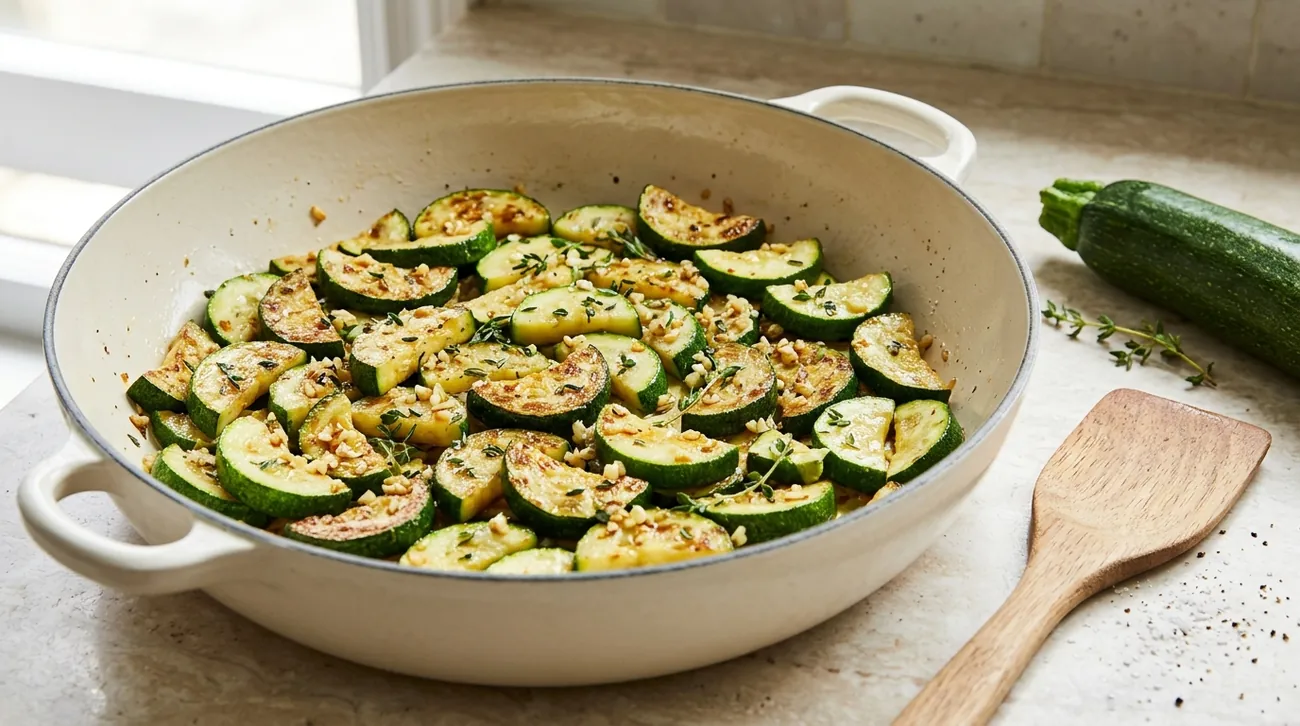
How to Cook Fresh Zucchini Without It Becoming Too Soft becomes easier once you understand what the method is supposed to accomplish. The central technique is to cut uniform pieces, heat a large skillet well, cook in a relatively thin layer, and season near the end. Your goal is light browned spots outside with a tender middle that still has structure. Instead of memorizing a rigid timer, learn the visual and tactile signals that show when the ingredient is ready.
This guide focuses on short high-heat cooking to protect texture. You do not need specialist equipment or professional kitchen experience; careful preparation, appropriate heat, and a few deliberate checks are usually enough. The details change with the ingredient and its size, so the explanations include ways to adapt rather than promising that one setting works for every vegetable.
What cooking fresh zucchini is really trying to do
The point is not to race through the steps; it is to work toward this result: light browned spots outside with a tender middle that still has structure. Decide on the desired finish before you begin. Some vegetables should retain a firm bite; others need enough cooking to become creamy or soft. Understanding that destination makes it easier to judge when to stop.
The useful foundation is short high-heat cooking to protect texture. Notice what changes when you adjust temperature, moisture, surface contact, or cut size. By choosing the right conditions first, you remove much of the guesswork from the final minutes. A simple technique practiced carefully is more reliable than an elaborate recipe followed without observing the ingredients.
Firm sautéed zucchini: tools that make the task safer and easier
The core tool is a large skillet and wide spatula. Make sure it is clean, stable, and appropriate for the quantity of food. For knife work, use a board that will not slide and keep fingers clear of the cutting edge. For hot preparation, choose cookware that can be moved safely and use heatproof utensils rather than reaching over steam or splattering oil.
For firm sautéed zucchini, a detail worth remembering is this: cooking fresh zucchini. A dependable sharp knife often improves safety more than a complicated gadget, while a roomy pan can prevent crowding better than extra stirring. Organize clean bowls and a place to rest hot or cut ingredients before starting. Good setup makes the main technique easier to focus on.
Choose and prepare the right ingredients — firm sautéed zucchini
In the context of firm sautéed zucchini, consider this practical point: cut uniform pieces, heat a large skillet well, cook in a relatively thin layer, and season near the end. Wash fresh produce under running water when needed and dry it when surface moisture would interfere with cooking. Remove tough ends, damaged areas, and unsuitable stems. Cut pieces intentionally rather than leaving random sizes that will cook at different speeds.
Serve seared zucchini beside lemon chicken or toss briefly into pasta. This example shows why the preparation stage is part of the cooking method, not a separate chore. When ingredients vary greatly in density or thickness, cut or stage them differently. Keep ready-to-eat food separate from raw meat or fish and clean the board and tools after handling those foods.
The core technique, explained step by step for firm sautéed zucchini
Follow this sequence: cut uniform pieces, heat a large skillet well, cook in a relatively thin layer, and season near the end. Prepare everything first so the critical moments are not interrupted by another chopping task. Keep your movements controlled, particularly when handling steam, knives, or hot oil. Once the process begins, observe what happens instead of automatically turning the heat higher when progress seems slow.
Check for light browned spots outside with a tender middle that still has structure. The appropriate finish depends on the food, so test the thickest or firmest piece when relevant. If a piece is not ready, continue briefly and check again. Making one small adjustment based on evidence is preferable to extending the entire process by an arbitrary five minutes.
Firm sautéed zucchini: why heat, moisture, and timing matter
The decision is more specific for firm sautéed zucchini: light browned spots outside with a tender middle that still has structure. Control how much moisture stays in the cooking environment. Browning vegetables calls for a different approach from making a dressing or safely handling a sharp knife. The right method depends on the desired result; there is no universal benefit to more speed or higher heat.
Crowding, wet surfaces, and long cooking create a soft watery result. This is an example of a mismatch between method and conditions. Learn to notice steam, browning, liquid pooling, or visible softening. Those signals tell you whether to spread ingredients out, lower the heat, dry a surface, or stop cooking before the intended texture is lost.
Signs that tell you when to stop — firm sautéed zucchini
The desired signal is light browned spots outside with a tender middle that still has structure. Do not use color alone where tenderness is the real measure. A fork, tasting a cooked vegetable, or examining a cut surface can confirm what the eye suggests. Check early enough that you still have room to stop at a good point rather than discovering the texture is already gone.
For firm sautéed zucchini, a detail worth remembering is this: crowding, wet surfaces, and long cooking create a soft watery result. Move it to a serving dish, spread it out, or cool it according to the technique when you need to halt the process. If the recipe later uses the ingredient in another hot dish, leaving it slightly firmer now may be appropriate.
Mistakes that undermine the result for firm sautéed zucchini
The most important error to avoid is crowding, wet surfaces, and long cooking create a soft watery result. Rather than correcting everything after the food is cooked, identify the cause before the first step. Ask whether the produce is too wet, the pieces are too different in size, the cookware is too full, or the heat is poorly matched. Each problem has a different practical correction.
In the context of firm sautéed zucchini, consider this practical point: a large skillet and wide spatula. Uneven cutting, a slippery board, dirty greens, or poorly heated cookware creates more work later. Another problem is adding seasoning at the wrong stage: delicate herbs and acidic dressings frequently benefit from a finishing role. Keep the ingredients recognizable and avoid covering up poor texture with unnecessary additions.
Firm sautéed zucchini: adapting the technique for different vegetables
Use thicker half-moons for sautéing, or slender strips for a shorter cooking time. The lesson is to translate a method, not mechanically copy a minute count. A thin zucchini slice and a large carrot wedge are not interchangeable for timing. Likewise, sturdy kale stems and baby spinach leaves need different handling. Adjust cut size, heat, order, and checking frequency as needed.
The decision is more specific for firm sautéed zucchini: use thicker half-moons for sautéing, or slender strips for a shorter cooking time. The same pan can produce browning with dry firm pieces but a wet steamed result with overcrowded leaves. For a first attempt, choose one substitution so it is easy to understand whether the method still works.
Seasoning without overpowering freshness — firm sautéed zucchini
For firm sautéed zucchini, a detail worth remembering is this: serve seared zucchini beside lemon chicken or toss briefly into pasta. The natural sweetness of carrots, slight bitterness of leafy greens, and grassy taste of herbs deserve different treatments. Taste when it is safe and adjust gradually. Lemon, vinegar, or a little fat can provide a finishing contrast when the ingredient itself is mild.
Serve seared zucchini beside lemon chicken or toss briefly into pasta. Consider whether the final dish needs a bright finish or whether seasoning should remain neutral so the vegetable can be reused in another meal. The same batch may be a side dish today and an ingredient in soup tomorrow; heavy early seasoning can reduce that flexibility.
Practicing the skill in an everyday recipe for firm sautéed zucchini
Use a straightforward example: serve seared zucchini beside lemon chicken or toss briefly into pasta. Write down just three things before cooking: the shape of the pieces, the state of the pan or water, and the texture you want at the end. Then carry out cut uniform pieces, heat a large skillet well, cook in a relatively thin layer, and season near the end. This gives you a practical learning goal without requiring a complex shopping list.
In the context of firm sautéed zucchini, consider this practical point: short high-heat cooking to protect texture. Was it evenly cooked? Did the texture meet the goal? Did the flavor remain distinct? A quick note helps improve the next attempt far more than simply repeating the same steps regardless of the result. Skills develop through noticing specific causes and effects.
Firm sautéed zucchini: how to scale up for a larger meal
The decision is more specific for firm sautéed zucchini: cooking fresh zucchini. Crowding changes how heat and moisture move, and very full cookware can be awkward or unsafe. Work in batches or use an additional tray if the method needs room. For steam or blanching, avoid loading so much food that the cooking environment cools dramatically.
For firm sautéed zucchini, a detail worth remembering is this: cut uniform pieces, heat a large skillet well, cook in a relatively thin layer, and season near the end. Keep cut sizes reasonably consistent within each batch. When cooking for a group, test texture rather than assuming a bigger pot or oven has the same timing as your usual small dinner.
Using the prepared vegetables later — firm sautéed zucchini
In the context of firm sautéed zucchini, consider this practical point: light browned spots outside with a tender middle that still has structure. Prepare only the components that keep their quality; soft herbs, delicate fried surfaces, and crisp garnishes are often at their best close to serving. Properly cooled cooked vegetables can contribute to grain bowls, soups, wraps, or side dishes, but their texture may change after chilling.
The decision is more specific for firm sautéed zucchini: crowding, wet surfaces, and long cooking create a soft watery result. Reheat leftovers to 165°F (74°C) when reheating is appropriate. Do not leave prepared food standing at room temperature for extended periods while working on the rest of a meal. Safe handling complements good technique.
Questions people often meet mid-process for firm sautéed zucchini
What if the pieces cook unevenly? Check thickness and whether the food is crowded. Use thicker half-moons for sautéing, or slender strips for a shorter cooking time. Separate pieces that are already tender from those needing more time instead of cooking everything until the hardest part is done.
For firm sautéed zucchini, a detail worth remembering is this: a large skillet and wide spatula. You usually cannot reverse overcooking, but you can use the ingredient differently when it remains safe to eat. A soft vegetable may suit soup or a purée; a delicate wilted green may fit a cooked filling better than a salad. Next time, stop earlier and use the doneness signals described above.
A simple practice session for cooking fresh zucchini
Try this method with a small, manageable amount the first time. Set out a large skillet and wide spatula, prepare your ingredients carefully, and concentrate on one variable: how quickly the food reaches light browned spots outside with a tender middle that still has structure. Do not change the cut size, the heat, and the finishing sauce all at once. A controlled practice makes it easier to identify what produced a good outcome and to repeat it for the next meal.
For the next attempt, use this comparison: serve seared zucchini beside lemon chicken or toss briefly into pasta. Consider whether the method needs a different order of cooking, a shorter exposure to heat, or more space around the food. If anything goes wrong, remember that crowding, wet surfaces, and long cooking create a soft watery result. Improving that particular condition is more useful than buying a new gadget or assuming the entire recipe is unreliable.
One principle to remember — firm sautéed zucchini
The most transferable lesson is short high-heat cooking to protect texture. Start with stable tools, prepare the vegetables deliberately, and watch for light browned spots outside with a tender middle that still has structure. This gives you a repeatable process you can apply to many simple home meals without turning every weeknight into a cooking experiment.
Continue with How to Chop Fresh Herbs for Maximum Flavor in Meals for a closely related method from the Cooking Skills collection. Practicing complementary techniques builds confidence because the same ideas—careful preparation, sensible timing, and attention to texture—show up in different ingredients.
A practical reminder for the next attempt for firm sautéed zucchini
One last practice tip for cooking fresh zucchini: before every attempt, set up a large skillet and wide spatula and picture light browned spots outside with a tender middle that still has structure. If you get crowding, wet surfaces, and long cooking create a soft watery result, change the preparation or amount in the pan, not every variable together. Use serve seared zucchini beside lemon chicken or toss briefly into pasta as a repeatable example. Keeping a brief note about the cut size and final texture makes the skill easier to transfer to another vegetable.