
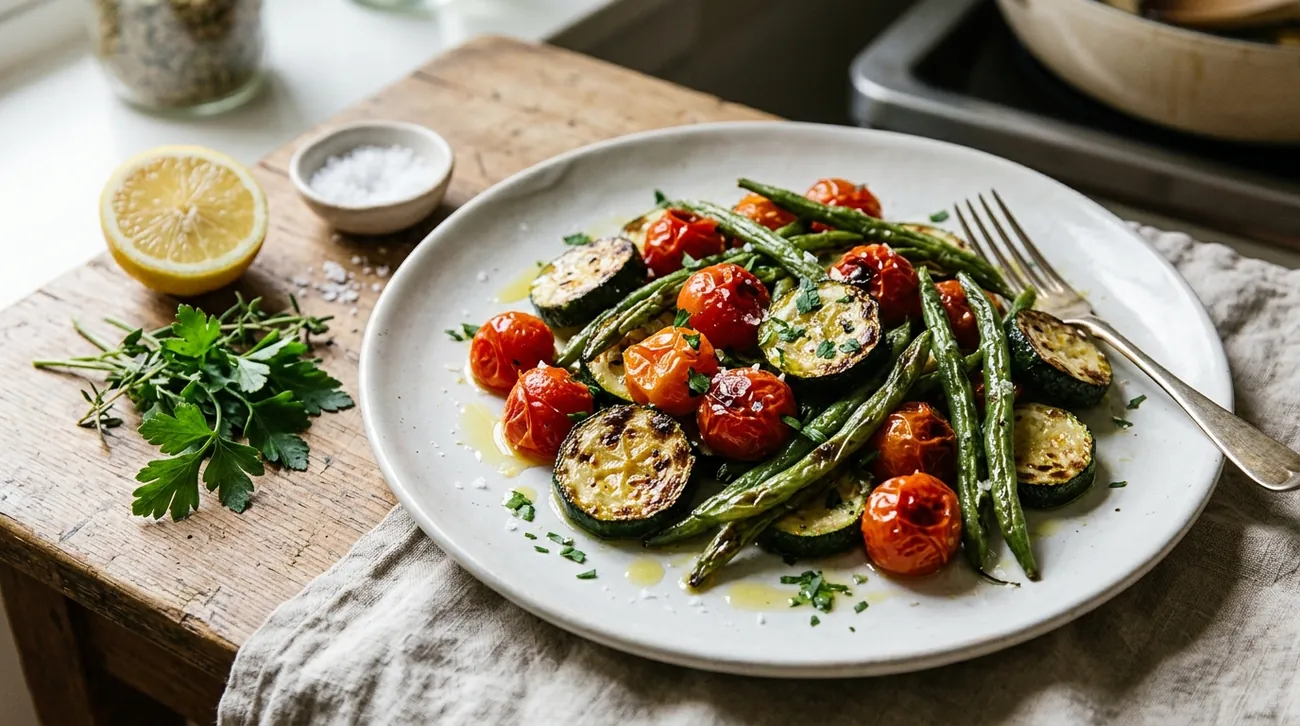
How to Balance Lemon, Salt, and Herbs in Fresh Dishes becomes easier once you understand what the method is supposed to accomplish. The central technique is season modestly during cooking, taste for salt first, add small amounts of lemon, and finish with chopped fresh herbs off the heat. Your goal is flavors taste distinct yet harmonious instead of aggressively sour, salty, or perfumed. Instead of memorizing a rigid timer, learn the visual and tactile signals that show when the ingredient is ready.
This guide focuses on incremental tasting and different flavor roles. You do not need specialist equipment or professional kitchen experience; careful preparation, appropriate heat, and a few deliberate checks are usually enough. The details change with the ingredient and its size, so the explanations include ways to adapt rather than promising that one setting works for every vegetable.
What balancing lemon, salt, and herbs is really trying to do
The point is not to race through the steps; it is to work toward this result: flavors taste distinct yet harmonious instead of aggressively sour, salty, or perfumed. Decide on the desired finish before you begin. Some vegetables should retain a firm bite; others need enough cooking to become creamy or soft. Understanding that destination makes it easier to judge when to stop.
The useful foundation is incremental tasting and different flavor roles. Notice what changes when you adjust temperature, moisture, surface contact, or cut size. By choosing the right conditions first, you remove much of the guesswork from the final minutes. A simple technique practiced carefully is more reliable than an elaborate recipe followed without observing the ingredients.
Lemon and herb seasoning: tools that make the task safer and easier
The core tool is a spoon for tasting, fresh lemon, and a small knife for herbs. Make sure it is clean, stable, and appropriate for the quantity of food. For knife work, use a board that will not slide and keep fingers clear of the cutting edge. For hot preparation, choose cookware that can be moved safely and use heatproof utensils rather than reaching over steam or splattering oil.
For lemon and herb seasoning, a detail worth remembering is this: balancing lemon, salt, and herbs. A dependable sharp knife often improves safety more than a complicated gadget, while a roomy pan can prevent crowding better than extra stirring. Organize clean bowls and a place to rest hot or cut ingredients before starting. Good setup makes the main technique easier to focus on.
Choose and prepare the right ingredients — lemon and herb seasoning
In the context of lemon and herb seasoning, consider this practical point: season modestly during cooking, taste for salt first, add small amounts of lemon, and finish with chopped fresh herbs off the heat. Wash fresh produce under running water when needed and dry it when surface moisture would interfere with cooking. Remove tough ends, damaged areas, and unsuitable stems. Cut pieces intentionally rather than leaving random sizes that will cook at different speeds.
A bean salad may need lemon, while a tomato dish may already have enough acidity. This example shows why the preparation stage is part of the cooking method, not a separate chore. When ingredients vary greatly in density or thickness, cut or stage them differently. Keep ready-to-eat food separate from raw meat or fish and clean the board and tools after handling those foods.
The core technique, explained step by step for lemon and herb seasoning
Follow this sequence: season modestly during cooking, taste for salt first, add small amounts of lemon, and finish with chopped fresh herbs off the heat. Prepare everything first so the critical moments are not interrupted by another chopping task. Keep your movements controlled, particularly when handling steam, knives, or hot oil. Once the process begins, observe what happens instead of automatically turning the heat higher when progress seems slow.
Check for flavors taste distinct yet harmonious instead of aggressively sour, salty, or perfumed. The appropriate finish depends on the food, so test the thickest or firmest piece when relevant. If a piece is not ready, continue briefly and check again. Making one small adjustment based on evidence is preferable to extending the entire process by an arbitrary five minutes.
Lemon and herb seasoning: why heat, moisture, and timing matter
The decision is more specific for lemon and herb seasoning: flavors taste distinct yet harmonious instead of aggressively sour, salty, or perfumed. Control how much moisture stays in the cooking environment. Browning vegetables calls for a different approach from making a dressing or safely handling a sharp knife. The right method depends on the desired result; there is no universal benefit to more speed or higher heat.
Adding a large dose of acid before tasting can overwhelm delicate vegetables. This is an example of a mismatch between method and conditions. Learn to notice steam, browning, liquid pooling, or visible softening. Those signals tell you whether to spread ingredients out, lower the heat, dry a surface, or stop cooking before the intended texture is lost.
Signs that tell you when to stop — lemon and herb seasoning
The desired signal is flavors taste distinct yet harmonious instead of aggressively sour, salty, or perfumed. Do not use color alone where tenderness is the real measure. A fork, tasting a cooked vegetable, or examining a cut surface can confirm what the eye suggests. Check early enough that you still have room to stop at a good point rather than discovering the texture is already gone.
For lemon and herb seasoning, a detail worth remembering is this: adding a large dose of acid before tasting can overwhelm delicate vegetables. Move it to a serving dish, spread it out, or cool it according to the technique when you need to halt the process. If the recipe later uses the ingredient in another hot dish, leaving it slightly firmer now may be appropriate.
Mistakes that undermine the result for lemon and herb seasoning
The most important error to avoid is adding a large dose of acid before tasting can overwhelm delicate vegetables. Rather than correcting everything after the food is cooked, identify the cause before the first step. Ask whether the produce is too wet, the pieces are too different in size, the cookware is too full, or the heat is poorly matched. Each problem has a different practical correction.
In the context of lemon and herb seasoning, consider this practical point: a spoon for tasting, fresh lemon, and a small knife for herbs. Uneven cutting, a slippery board, dirty greens, or poorly heated cookware creates more work later. Another problem is adding seasoning at the wrong stage: delicate herbs and acidic dressings frequently benefit from a finishing role. Keep the ingredients recognizable and avoid covering up poor texture with unnecessary additions.
Lemon and herb seasoning: adapting the technique for different vegetables
Use zest for aroma without as much acidity, or choose parsley for a quieter herbal note. The lesson is to translate a method, not mechanically copy a minute count. A thin zucchini slice and a large carrot wedge are not interchangeable for timing. Likewise, sturdy kale stems and baby spinach leaves need different handling. Adjust cut size, heat, order, and checking frequency as needed.
The decision is more specific for lemon and herb seasoning: use zest for aroma without as much acidity, or choose parsley for a quieter herbal note. The same pan can produce browning with dry firm pieces but a wet steamed result with overcrowded leaves. For a first attempt, choose one substitution so it is easy to understand whether the method still works.
Seasoning without overpowering freshness — lemon and herb seasoning
For lemon and herb seasoning, a detail worth remembering is this: a bean salad may need lemon, while a tomato dish may already have enough acidity. The natural sweetness of carrots, slight bitterness of leafy greens, and grassy taste of herbs deserve different treatments. Taste when it is safe and adjust gradually. Lemon, vinegar, or a little fat can provide a finishing contrast when the ingredient itself is mild.
A bean salad may need lemon, while a tomato dish may already have enough acidity. Consider whether the final dish needs a bright finish or whether seasoning should remain neutral so the vegetable can be reused in another meal. The same batch may be a side dish today and an ingredient in soup tomorrow; heavy early seasoning can reduce that flexibility.
Practicing the skill in an everyday recipe for lemon and herb seasoning
Use a straightforward example: a bean salad may need lemon, while a tomato dish may already have enough acidity. Write down just three things before cooking: the shape of the pieces, the state of the pan or water, and the texture you want at the end. Then carry out season modestly during cooking, taste for salt first, add small amounts of lemon, and finish with chopped fresh herbs off the heat. This gives you a practical learning goal without requiring a complex shopping list.
In the context of lemon and herb seasoning, consider this practical point: incremental tasting and different flavor roles. Was it evenly cooked? Did the texture meet the goal? Did the flavor remain distinct? A quick note helps improve the next attempt far more than simply repeating the same steps regardless of the result. Skills develop through noticing specific causes and effects.
Lemon and herb seasoning: how to scale up for a larger meal
The decision is more specific for lemon and herb seasoning: balancing lemon, salt, and herbs. Crowding changes how heat and moisture move, and very full cookware can be awkward or unsafe. Work in batches or use an additional tray if the method needs room. For steam or blanching, avoid loading so much food that the cooking environment cools dramatically.
For lemon and herb seasoning, a detail worth remembering is this: season modestly during cooking, taste for salt first, add small amounts of lemon, and finish with chopped fresh herbs off the heat. Keep cut sizes reasonably consistent within each batch. When cooking for a group, test texture rather than assuming a bigger pot or oven has the same timing as your usual small dinner.
Using the prepared vegetables later — lemon and herb seasoning
In the context of lemon and herb seasoning, consider this practical point: flavors taste distinct yet harmonious instead of aggressively sour, salty, or perfumed. Prepare only the components that keep their quality; soft herbs, delicate fried surfaces, and crisp garnishes are often at their best close to serving. Properly cooled cooked vegetables can contribute to grain bowls, soups, wraps, or side dishes, but their texture may change after chilling.
The decision is more specific for lemon and herb seasoning: adding a large dose of acid before tasting can overwhelm delicate vegetables. Reheat leftovers to 165°F (74°C) when reheating is appropriate. Do not leave prepared food standing at room temperature for extended periods while working on the rest of a meal. Safe handling complements good technique.
Questions people often meet mid-process for lemon and herb seasoning
What if the pieces cook unevenly? Check thickness and whether the food is crowded. Use zest for aroma without as much acidity, or choose parsley for a quieter herbal note. Separate pieces that are already tender from those needing more time instead of cooking everything until the hardest part is done.
For lemon and herb seasoning, a detail worth remembering is this: a spoon for tasting, fresh lemon, and a small knife for herbs. You usually cannot reverse overcooking, but you can use the ingredient differently when it remains safe to eat. A soft vegetable may suit soup or a purée; a delicate wilted green may fit a cooked filling better than a salad. Next time, stop earlier and use the doneness signals described above.
A simple practice session for balancing lemon, salt, and herbs
Try this method with a small, manageable amount the first time. Set out a spoon for tasting, fresh lemon, and a small knife for herbs, prepare your ingredients carefully, and concentrate on one variable: how quickly the food reaches flavors taste distinct yet harmonious instead of aggressively sour, salty, or perfumed. Do not change the cut size, the heat, and the finishing sauce all at once. A controlled practice makes it easier to identify what produced a good outcome and to repeat it for the next meal.
For the next attempt, use this comparison: a bean salad may need lemon, while a tomato dish may already have enough acidity. Consider whether the method needs a different order of cooking, a shorter exposure to heat, or more space around the food. If anything goes wrong, remember that adding a large dose of acid before tasting can overwhelm delicate vegetables. Improving that particular condition is more useful than buying a new gadget or assuming the entire recipe is unreliable.
One principle to remember — lemon and herb seasoning
The most transferable lesson is incremental tasting and different flavor roles. Start with stable tools, prepare the vegetables deliberately, and watch for flavors taste distinct yet harmonious instead of aggressively sour, salty, or perfumed. This gives you a repeatable process you can apply to many simple home meals without turning every weeknight into a cooking experiment.
Continue with How to Make a Simple Vinaigrette for Any Green Salad for a closely related method from the Cooking Skills collection. Practicing complementary techniques builds confidence because the same ideas—careful preparation, sensible timing, and attention to texture—show up in different ingredients.