
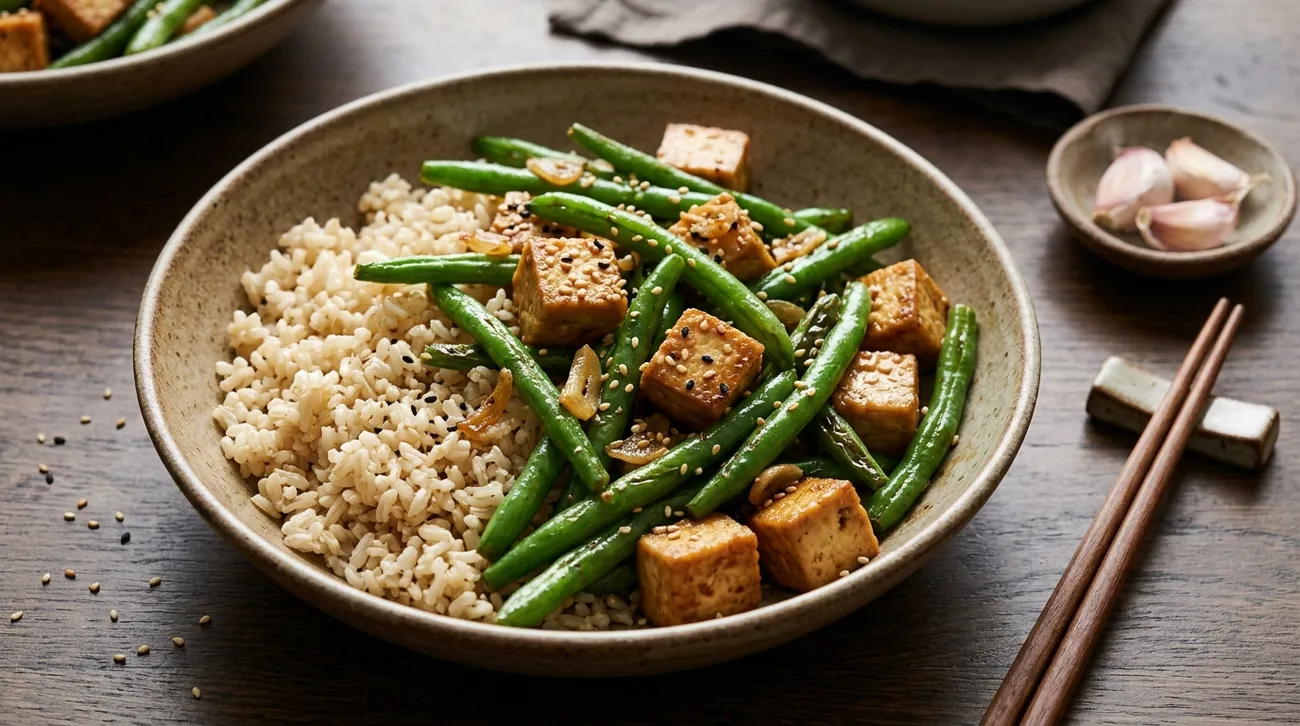
Garlic Green Bean and Tofu Stir-Fry with Brown Rice works best when the ingredients retain their own character. The central idea is a balanced plant-based skillet with good heat management: a clear, practical approach for an ordinary home kitchen rather than a complicated restaurant technique. Expect golden tofu and snappy beans with a savory coating rather than an oily sauce. This guide explains the ingredient choices, the order of cooking, the signs to watch for, and ways to adjust the meal without losing what makes it appealing.
The usual working time is about 30 minutes if brown rice is cooked, although the size of vegetables, the strength of your stove, and your experience with prep can change that. Read the method once before starting, set everything within reach, and rely on the appearance and temperature of food rather than the clock alone. A relaxed, organized cooking sequence generally gives a more reliable result than racing to meet a promised minute count.
The idea behind this easy meal for green bean and tofu stir-fry
The attraction here is not a long ingredient list. It is the way firm tofu, green beans, garlic, ginger, cooked brown rice, neutral oil, and a modest amount of soy sauce or other salty seasoning can be combined into a dish with recognizable flavors and useful texture. Each component plays a part: the fresh produce supplies brightness and moisture, the main ingredient gives substance, and the seasoning keeps the dish from feeling flat. Resist adding every extra vegetable in the refrigerator. A few well-chosen additions are easier to cook evenly and allow the finished plate to taste deliberate.
Think about golden tofu and snappy beans with a savory coating rather than an oily sauce as the destination. That description offers better guidance than an exact image because your vegetables may be larger, smaller, riper, or wetter than someone else’s. Let those differences determine whether to cook for another minute, drain an ingredient, or reserve some garnish for the end. The result should taste fresh without depending on expensive or specialized equipment.
Green bean and tofu stir-fry: what to gather before you begin
Build the main ingredient list around firm tofu, green beans, garlic, ginger, cooked brown rice, neutral oil, and a modest amount of soy sauce or other salty seasoning. You will also need sensible staples such as water, salt, and pepper according to the recipe’s seasonings. Choose portions that suit your household instead of buying extra packages only because a list sounds precise. Use enough of the main vegetables to make them prominent and enough of the supporting ingredients to hold the dish together.
At the shop, select firm tofu and green beans that feel taut and break cleanly. Pay attention to the condition of fresh produce and chilled ingredients rather than assuming the biggest package is the best value. Check labels for allergens or sodium when they matter to you, and keep perishable purchases cold on the way home. If something is already near peak ripeness, decide to cook it soon instead of leaving it for an uncertain future meal.
Prepare the ingredients for smoother cooking — green bean and tofu stir-fry
For green bean and tofu stir-fry, a detail worth remembering is this: a balanced plant-based skillet with good heat management. Cut similar ingredients into reasonably even pieces so they reach the intended texture together. Give yourself enough counter space for a clean board, a bowl for scraps, and a place to rest cooked food. This makes the method calmer and helps prevent mistakes such as leaving a delicate ingredient on the heat too long.
Cook rice safely and refrigerate promptly, press tofu, and trim beans in advance. Keep utensils that touch raw poultry or fish away from ready-to-eat produce, and wash hands and work surfaces after handling raw animal ingredients. If the recipe contains only plants and dairy, clean handling still matters: use fresh towels, chilled yogurt where relevant, and clean containers. Good preparation protects both flavor and food safety; it is not merely a way to cook faster.
Cook garlic green bean and tofu stir-fry with brown rice step by step
The basic sequence is straightforward: Pat tofu dry and brown it first, remove from pan, cook beans until crisp-tender, briefly stir in garlic and ginger, then return tofu and coat lightly. Notice how the ingredients enter the pan or bowl in an order that respects their texture. Strong heat is useful for browning, while a gentler finish allows the final flavors to come together. If the food seems to be catching or drying, reduce heat or add a small amount of liquid instead of blindly following the expected cooking time.
Keep a clean tasting spoon handy for fully cooked components and pause to assess color, tenderness, and moisture. You are aiming for golden tofu and snappy beans with a savory coating rather than an oily sauce. If the preparation involves raw poultry, verify that its thickest portion reaches at least 165°F (74°C); for fish, use a food thermometer to confirm at least 145°F (63°C). Never judge animal-protein safety by color alone. Finish with fresh ingredients or acidic seasoning only after deciding that the underlying dish is cooked properly.
Green bean and tofu stir-fry: how to recognize the right texture
The most useful cue is golden tofu and snappy beans with a savory coating rather than an oily sauce. Taste a vegetable or a bean when it is safe to do so; one piece can tell you more than a cooking timer. A pleasing dish has contrast. Tender elements should not be disintegrating, crisp elements should not be raw in the center if they require cooking, and a dressing or sauce should lightly coat instead of hiding the ingredients.
In the context of green bean and tofu stir-fry, consider this practical point: firm tofu, green beans, garlic, ginger, cooked brown rice, neutral oil, and a modest amount of soy sauce or other salty seasoning. Fresh vegetables release water, thawed produce may carry ice, and washed leaves can hold surprisingly much liquid. The correction depends on the cause: drain a component, briefly evaporate liquid in a wide pan, or hold juicy garnishes until service. If it seems dry, add a measured splash of liquid, olive oil, or an appropriate sauce rather than starting again.
Flavor: build it in layers — green bean and tofu stir-fry
The decision is more specific for green bean and tofu stir-fry: golden tofu and snappy beans with a savory coating rather than an oily sauce. Begin with the core ingredients and adjust by tasting. Aromatics may be cooked early to soften their bite, while lemon and delicate herbs often taste more vivid toward the end. Keep salt additions gradual, especially if canned beans, broth, or savory sauces already contribute seasoning.
Add sliced carrots, swap beans for broccoli, or use citrus to brighten the finish. Make one adjustment at a time so you understand its effect. Acid can brighten an earthy component, a creamy topping can soften sharpness, and herbs can add freshness without extra cooking. If a variation introduces additional liquid, account for it in the method; a flavorful idea can still ruin the texture when it changes the amount of moisture in the dish.
Common mistakes and their fixes for green bean and tofu stir-fry
One avoidable problem is putting watery tofu into a crowded cool pan prevents a browned surface. The underlying issue is control: the temperature, the timing, or the amount of liquid no longer suits the ingredients. Correct this at the preparation stage where possible. When the mistake has already happened, taste and evaluate before making a rescue attempt. More seasoning rarely solves a texture problem, and cooking longer cannot always restore freshness.
For green bean and tofu stir-fry, a detail worth remembering is this: select firm tofu and green beans that feel taut and break cleanly. Prepare ingredients that need chopping before the pan is hot, and keep a space for clean cooked items. A third is confusing appearance with readiness: browned edges are useful information but do not guarantee that a thick protein is safely cooked. Use safe temperature checks where relevant and texture checks for vegetables. These small habits travel well to other weeknight meals.
Green bean and tofu stir-fry: adjusting portions without losing balance
In the context of green bean and tofu stir-fry, consider this practical point: pat tofu dry and brown it first, remove from pan, cook beans until crisp-tender, briefly stir in garlic and ginger, then return tofu and coat lightly. Half a batch may cook faster because the pan is less crowded; doubling can require two pans or two batches to preserve browning. A change in quantity should never be treated as a mechanical change in minutes. Watch what is actually happening and adjust the process.
When you want more substantial servings, expand the starch or protein rather than simply increasing the sauce. Spoon directly over hot brown rice and scatter with scallions. For a lighter plate, increase vegetables and serve a smaller portion of the base. The best portion is the one that meets the meal’s purpose and leaves manageable leftovers, not necessarily the portion implied by a photograph.
Variations that make sense for the ingredients — green bean and tofu stir-fry
There is room for flexibility without turning this recipe into a completely different dinner. Add sliced carrots, swap beans for broccoli, or use citrus to brighten the finish. Make substitutions based on what needs using first, but consider whether the replacement cooks at the same speed and contains a similar amount of water. Firm vegetables often need earlier heat; tender leaves and delicate herbs need very little. This distinction matters more than using exactly the same color of produce.
The decision is more specific for green bean and tofu stir-fry: add sliced carrots, swap beans for broccoli, or use citrus to brighten the finish. Sauces, packaged stocks, wraps, and seasonings can introduce ingredients you did not expect. Keep the original technique as an anchor and choose replacement foods whose texture makes sense in that technique. If the meal already feels balanced, a small garnish can add variety more effectively than a long list of extras.
What to serve with it for green bean and tofu stir-fry
Spoon directly over hot brown rice and scatter with scallions. A suitable side should support the main dish, not compete with it. If the recipe is already hearty, a simple crisp salad may be enough. When it is mostly vegetables, cooked grains, bread, or a nourishing bean side can make it a more substantial meal. Consider the amount of sauce and choose something that makes good use of it.
For green bean and tofu stir-fry, a detail worth remembering is this: putting watery tofu into a crowded cool pan prevents a browned surface. Use a warm plate for hot food and a cool bowl for a chilled salad. Add a final scattering of herbs, a little lemon, or a spoonful of sauce after plating so the colors remain clear. For family serving, keep optional toppings separate; diners can adjust tang, heat, and richness without requiring several versions of dinner.
Green bean and tofu stir-fry: making the work easier on a busy day
Cook rice safely and refrigerate promptly, press tofu, and trim beans in advance. Divide preparation into tasks that keep their quality and tasks best finished fresh. Chopping firm vegetables or measuring dry seasonings usually works better ahead than dressing tender leaves or slicing ripe avocado. Label prepared containers when you might otherwise forget what they contain. Plan the parts that actually save time rather than creating a complicated weekend project.
In the context of green bean and tofu stir-fry, consider this practical point: cook rice safely and refrigerate promptly, press tofu, and trim beans in advance. Put the serving plates and tools out before the final minute so the finished food does not sit while you search for a colander or a spoon. A predictable order makes these small meals feel easier without requiring expensive kitchen tools or an extensive ingredient collection.
Storing, reheating, and using extra portions — green bean and tofu stir-fry
Refrigerate rice and stir-fry promptly and reheat fully; avoid leaving cooked rice at room temperature. Put perishable leftovers in the refrigerator within two hours of preparation, or within one hour when the surrounding temperature exceeds 90°F (32°C). Most cooked leftovers are best used within three to four days when refrigerated safely. If you will not use them in that window, freeze suitable portions promptly rather than repeatedly warming the whole container.
The decision is more specific for green bean and tofu stir-fry: spoon directly over hot brown rice and scatter with scallions. Crisp vegetables, herbed yogurt, fresh greens, and crunchy toppings may be more appealing when stored apart from warm or wet components. When reheating leftovers that require it, heat thoroughly; 165°F (74°C) is the recommended temperature for reheated leftovers. Use an appropriate pan or covered microwave-safe dish, stir to avoid cold spots, and add fresh garnish only after heating.
Answers to practical cooking questions for green bean and tofu stir-fry
Can the ingredients be swapped? Usually, provided you account for moisture, texture, and cooking time. Add sliced carrots, swap beans for broccoli, or use citrus to brighten the finish. Start with a small substitution and check the result before changing several things at once. That gives you the flexibility to use what you bought without sacrificing the point of the meal.
Can it be prepared in advance? Cook rice safely and refrigerate promptly, press tofu, and trim beans in advance. The important distinction is between a prepared component and a finished dish. A sauce, grain, or cooked bean may be convenient in a sealed container, while a crisp wrap or leafy salad is often better assembled close to serving. Use safe refrigeration and keep chilled components cold.
Green bean and tofu stir-fry: a small plan for next time
After the meal, make one mental note: was the final dish too wet, not seasoned enough, or cooked to the right texture? That observation is more useful than trying to memorize every instruction. Repeat the successful part and change only the weak point the next time. The technique of a balanced plant-based skillet with good heat management becomes easier when you pay attention to those signals rather than treating the recipe as inflexible.
For a different but related home-cooking idea, continue with Sheet Pan Salmon with Asparagus and Cherry Tomatoes. It uses the same Fresh Recipes collection, so you can carry forward what you have learned about shopping thoughtfully, handling vegetables carefully, and finishing with balanced flavor.